
CHANNELS

infoTECH Feature
November 11, 2008
CyberDefender: Keeping Web Users Secure
 By
By For most of the world, the Internet has become more than just a tool for information discovery. Today, people 'go online' to chat with friends, buy a car, manage their finances, even grocery shop.
Along with these advanced possibilities, the level of trust in Web sites across the Internet is becoming more and more critical.
From protection against identity theft, phishing attacks as well as pop-up blockers and password alerts, CyberDefender offers users tools that keep them protected while online.
The company's MyIdentityDefender provides free access to an easy to use security toolbar and works with Microsoft (News - Alert) IE offering user ratings, phishing alerts, ID information and more to safeguard visitors from sites that are harmful.

I took some time recently to ask Gary Guseinov, pictured left, the company's chief executive officer, if CyberDefender about the company's solution and the importance of trust in today's online world.
Can you describe some of the tools included in MyIdentityDefender and the benefits they provide for users?
MyIdentityDefender (MyID) offers users the following benefits:
-Ability to see Web site security ratings which are based on various data analysis
-Ability to rate sites and classify them
-Ability to see Web site ratings from other MyIdentityDefender users
-Ability to see which sites are safe and reputable – while using popular search engines like Google (News - Alert) and Yahoo.
In addition, the toolbar blocks pop-up and tells you which sites are tracking your IP address and planting cookies on your PC.
How do Web site rankings work and what is their importance:?
MyID has a significant back-end infrastructure which is designed to block users from harmful or less reputable sites. CyberDefender has developed a proprietary patent-pending technology called the earlyNETWORK which is designed to deliver fast updates to PCs by utilizing a secure peer to peer network. With the use of this network, CyberDefender updates users against new threats. In addition, CyberDefender utilizes a platform that collects data from various different sources which includes millions of CyberDefender users, ISPs and other technology partners. This data includes phishing URLs and malware URLs. In addition, the toolbar has many built-in features that analyze certain characteristics of the Web site and certain instances warn users from visiting potentially harmful sites.
MyID also uses a proprietary scoring system which takes into consideration real-time analysis and data feeds of malware and phishing URLs – in order to come up with its security ratings. In addition to the security ratings, MyID uses consumer's feedback in order to build a reputation history for the Web site. If certain reputation thresholds are met – the Web site will either become safe or unsafe for users and will receive an appropriate security rating.
What role does trust and reputation play in the success of today's Web sites?
Reputation and Trust is everything. There will be no e-commerce in the future if Web sites do not take action about protecting their reputation and trust factor. Because of exponentially growing security threats on the Web – various platforms are needed in order to certify that a Web site is safe. Some of these platforms include: Web site insurance or bonding, Web site authentication, trust ratings, and security ratings.
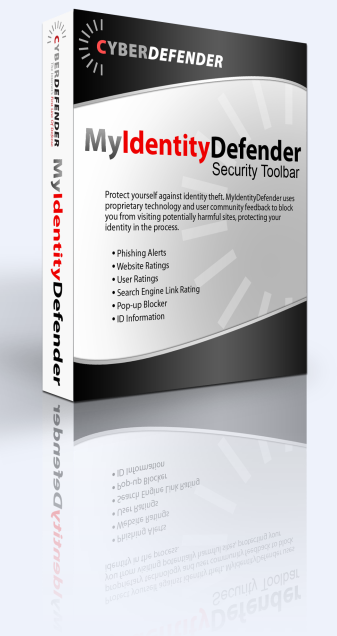 CyberDefender (pictured right) is aggregating data samples from as many Web sites as possible – in order to put together a platform which will evenly steer users towards more reputable or trusted sites. In other words – as we get more user feedback and analyze more sites – we will be able to tell the user which sites are more reputable in the category that they are searching in. For example – someone searching for a Ford F150 will come across 50,000 different Web sites on Google. Google won’t tell the user which sites are safe and which are actually trustworthy or even more relevant to what the user is searching for. MyID will tell the user which of these sites is reputable and which are safe to visit.
CyberDefender (pictured right) is aggregating data samples from as many Web sites as possible – in order to put together a platform which will evenly steer users towards more reputable or trusted sites. In other words – as we get more user feedback and analyze more sites – we will be able to tell the user which sites are more reputable in the category that they are searching in. For example – someone searching for a Ford F150 will come across 50,000 different Web sites on Google. Google won’t tell the user which sites are safe and which are actually trustworthy or even more relevant to what the user is searching for. MyID will tell the user which of these sites is reputable and which are safe to visit.How at risk are users that don't have virus protection software in use?
Anyone without adequate antivirus software or anti-spyware software is at significant risk and may lose their data or even identity. Since most malware today is designed to steel identity or information that leads to ID theft – no user is safe without proper protection. We believe that average Internet users should use several Internet security products – in order to be adequately protected.
Can you talk a little about your vision of "trust" in the online world and how it relates to your company’s product development?
We see the Internet evolving into what we call “trust clusters” – or social networks built on direct trust. This will not just include content sharing – like showing your friends your recent photos of a party – but other, more important functions, such as e-commerce and email. As threats continue to compound the Web – we will eventually find it close to impossible to surf the Web through searching - which is how most people use the Web today. We see the future where users will access their own social network (it may be Facebook (News - Alert), a derivative of it or a proprietary network) – where all users are verified and all transaction only take place among this unique group of people. Anyone wishing to contact this group via email or do business with this group – will have to get their democratic permission. This approach will reduce threats by 95% or higher and will make e-commerce and other online transactions safer. Users will still need basic protection – but ID theft will be significantly reduced. We believe that we are 5 to 10 years away from such “trust clusters” - but the writing is on the wall!
Visit www.cyberdefender.com for more!
Stefania Viscusi is an assignment editor for TMCnet, covering VoIP, CRM, call center and wireless technologies. To read more of Stefania’s articles, please visit her columnist page.
Edited by Stefania Viscusi
|
|
FOLLOW US |  |
 |
 |
infoTECH Headlines
cdmon Supports Online Businesses with Hosting, Domains and Digital Infrastructure Services
Why Hiring a Commercial Electrician in Keller Matters for Business Safety, Efficiency, and Growth
Are You Giving Your Agentic AI Too Much Access? Is it Impacting Compliance?
The Future of AI: Autonomous Training Models That Learn Continuously
How to Migrate from One Microsoft 365 Account to Another?
Simulating Your Worst-Case Scenario and Keeping Tabs on New Threats Using AI Systems
From Reactive to Proactive: Using AI to Hunt BEC in Real Time
Strengthening Tampa Businesses with Expert Cybersecurity Solutions
How Knowledge Management Software is Transforming Modern IT Operations
2025 Online Casino Trends: What to Expect in the Next 12 Months
infoTECH Whitepapers