
CHANNELS

infoTECH Feature
Eliminating Human Error: The Next Phase of DevOps
 By
By The way software is built has changed. It used to be that the engineering teams cranked code until the project waterfall was complete enough to pass over to QA. QA worked with Dev to iterate until ready to drop into production. Once the button was pushed, IT Operations managed the production deployment and performance reaction.
Today, Dev is an iterative process encouraging Dev work in smaller batches, incorporating frequent QA testing and collaboration with production (“Ops”) teams to prepare and hand off deployment. DevOps is the meshing of the Dev and production function in one tighter-connected flow, and part of the DevOps world is to know the developed code’s performance in production prior to the release button being hit.
IT infrastructure operations (all of the devices, services and apps that code runs and depends on), once a back office function in business, are experiencing the same transition that has already taken place in software development. If it hasn’t happened to your team yet, just wait, because it will. Managing IT infrastructure used to be all about managing and monitoring location-specific assets such as servers, storage and networks. Virtualization then arrived to become the basis of the IT deployment, and now location matters less (with the rise of Cloud services) and automation matters more. The crush of Dev and production (IT Ops) means the landscape of IT is forever changed, as the former back office function is now an integral part of any app-dependent company.
DevOps has accelerated the role of new technologies to make code rollout and management more automated and efficient. The staggering growth of Puppet, Chef, and Ansible are case in point. IT Automation is no longer only for the largest of server farm deployments (carriers, Fortune 100 IT) and leading web companies. It’s now a standard element of any Internet tech deployment, matching highly flexible and dynamic deployment capability with the leaner teams that manage Dev + Ops. This push results in a reality that traditional IT Ops functions (networking, storage, database, and so on) are less common in DevOps.
The highly integrated and responsive demands of DevOps make monitoring more relevant than ever before. An effective monitoring program helps address such questions as: How can we quantify the performance response of the latest NoSQL database? If it slows down, what does that mean? Is it caused by my code or the storage or other infrastructure supporting it? How do you keep track of server utilization related to the app performance? Do I know the performance of the IT Infrastructure that the code depends on?
Enter Performance Automation
There is a move to find performance monitoring tools (like LogicMonitor) that can predict code performance in the IT infrastructure. Continuous cloud server and application monitoring is essential to Cedexis, a SaaS (News  - Alert) firm that manages hosts in over 50 different countries around the globe to provide their industry leading Cloud Benchmarking and Cloud Load Balancing solutions. Deploying its technology strictly in a cloud environment, the Cedexis Ops team doesn't touch hardware. Its machines (loaded with the Cedexis app) are distributed all over the world. In some cases, Cedexis has permanent agreements with network operators, meaning those particular machines don’t get built up and torn down. But more commonly, Cedexis is regularly building up and tearing down machines, and on a global basis.
Josh Cody, head of Cedexis’ Ops explains, “We use Puppet and LogicMonitor together, laid side-by-side. We deploy LogicMonitor via Puppet on every box deployed using the Puppet-LogicMonitor module.”
Using Puppet, performance monitoring gets deployed via the config management tool. Cody continues, “Based on Cedexis’ DNS naming structure, machines are autodiscovered and we know immediately that the new machine is up and running. It’s an ideal scenario. In configuring the host, a package that knows what ought to be deployed on it, and what should be monitored, and deploy those steps as part of a fully automated deployment. It is huge to have these key tools deployed automatically.”
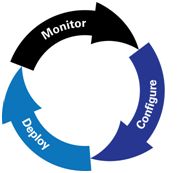
The next wave in DevOps of completing the automated cycle of configure – deploy – monitor of the production code has begun, limiting the chance for human error in code deployment. More reliable performance and more robust code should result.
About the Author
Kevin McGibben is the CEO of LogicMonitor, the SaaS-based IT monitoring solution that enables companies to easily and cost-effectively monitor their entire IT infrastructure stack from the cloud. Kevin has strong global experience in market strategy and channel implementation. He previously founded 32 South (News - Alert) to assist mobile and new-media technology companies in strategically expanding into international markets. Kevin also founded firms in the VoIP, consumer products and Web 2.0 industries. His experience includes international marketing, channel development and general management positions with technology companies Fujistu, TEKELEC and CIDCO.
Edited by Alisen Downey
|
|
FOLLOW US |  |
 |
 |
infoTECH Headlines
Exchange Server Recovery: Best Practices for Production Environment
Beyond the headlines: translating the Mythos risk for business leaders
cdmon Supports Online Businesses with Hosting, Domains and Digital Infrastructure Services
Why Hiring a Commercial Electrician in Keller Matters for Business Safety, Efficiency, and Growth
Are You Giving Your Agentic AI Too Much Access? Is it Impacting Compliance?
The Future of AI: Autonomous Training Models That Learn Continuously
How to Migrate from One Microsoft 365 Account to Another?
Simulating Your Worst-Case Scenario and Keeping Tabs on New Threats Using AI Systems
From Reactive to Proactive: Using AI to Hunt BEC in Real Time
Strengthening Tampa Businesses with Expert Cybersecurity Solutions
Rich Tehrani
infoTECH Whitepapers